Bryggen, the Hanseatic wharf, on foot
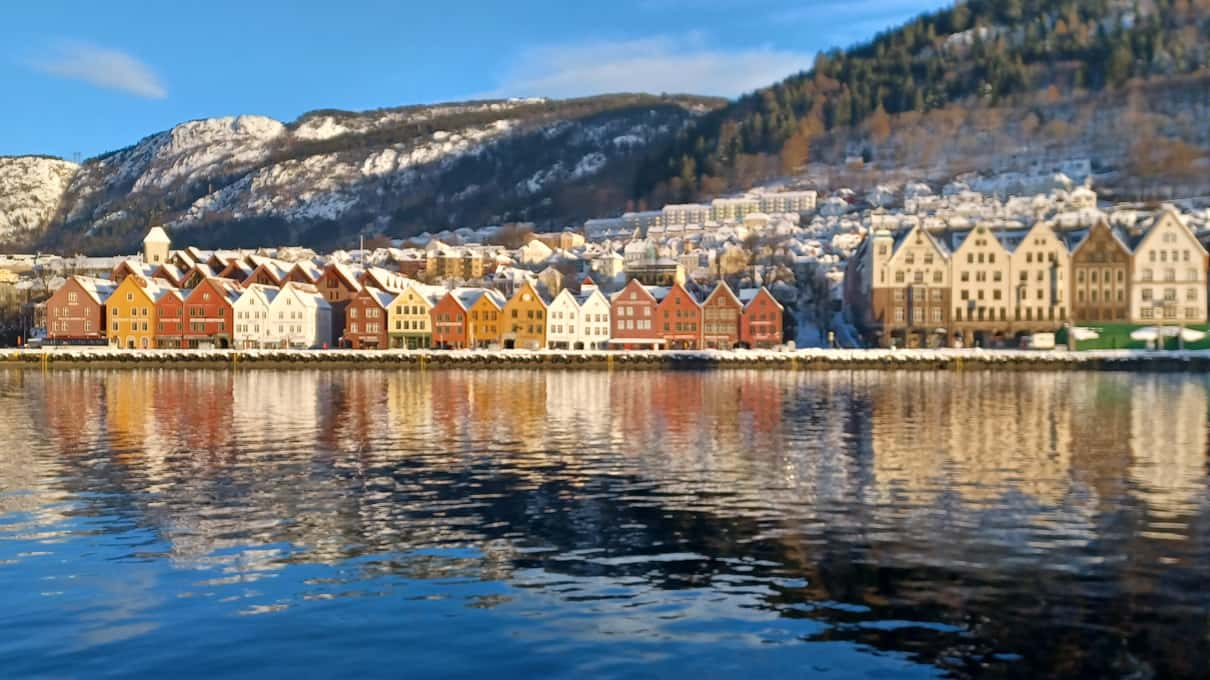
Bryggen is the row of wooden gables along the harbor that turns up on half the postcards sold in Bergen. For close to four centuries it was the base of German merchants who traded in stockfish, and three of the six walks on our site spend part of their time in its passages. This guide covers what you see there with a guide and what needs a ticket of its own.
Four centuries of German merchants
Bergen has traded by sea since its founding around 1070, and Bryggen, "the wharf", was where that trade met the town. From the 1360s the Hanseatic League ran one of its kontors here, a trading post of German merchants who lived by their own rules, and it lasted until 1754. The business at its heart was stockfish, cod dried on wooden racks in the wind of northern Norway and shipped south to Bergen for sale across Europe. Grain came north in return, and Bergen grew rich in the middle.
Life inside the kontor was strict. Boys came from Germany as apprentices, and the men who ran the trading houses were not allowed to marry while they served, so the wharf was a community of men who lived and worked in the wooden buildings. Relations with the Norwegian townspeople swung between need and open quarrel, and the German presence steered the city's trade for centuries.
After the fire of 1702
A town of wooden houses burns, and Bryggen burned more than once. The great fire of 1702 destroyed most of it, and the merchants rebuilt in the old style on the medieval plan, with long narrow buildings running back from the quay and passages between them. That is why the wharf feels older than its timbers. About 60 of those wooden buildings remain, some leaning at odd angles, and in 1979 UNESCO added Bryggen to its World Heritage list.
What the walks show you there
From the harbor, Bryggen looks like one row of painted gables. A guide takes you behind it, into the narrow passages that run back from the water between the buildings, under wooden galleries and outside stairs. In the courtyards further in, guides explain how a merchant house worked. Open fire was not allowed in the wooden buildings, so the merchants gathered to eat and keep warm in heated assembly rooms set apart at the back.
The Past & Present guides frame their half hour here as 1,000 years of trade and the Hanseatic League's 400 years, with the 300-year-old alleys as the evidence underfoot. Martin's longer stop leaves time for the stories of the merchants and the dried fish they shipped, often told with pictures from the archives held up beside the walls they show.
Most walks then climb to St. Mary's Church, a 12th-century Romanesque stone church and the oldest building in Bergen. It served as the German merchants' church, and guides use it to show how separate the Hanseatic community stayed from the Norwegian town around it.
How long each walk spends there
| Walk | Time at Bryggen | Also on the route | From |
|---|---|---|---|
| City walk with Martin | About 50 min | Fish market; Grieg statue; St. Mary's Church | ~$32 |
| Past & Present, our pick | About 30 min | Bergenhus Fortress; St. Mary's Church; the lanes behind | ~$36 |
| Walk with scenic ferry ride | About 20 min | St. Mary's Church; Øvregaten; a ferry ride | ~$47 |
Martin's small-group city walk from ~$32 gives the wharf the most time, about 50 minutes on its itinerary, after a loop through the center, and it finishes at St. Mary's Church. Reviewers mention the archive photographs he holds up on the spot, which make the old trade easier to picture. Past & Present from ~$36 spends about 30 minutes there, arriving from Bergenhus Fortress with the medieval background already told and leaving uphill for the residential lanes behind. The ferry walk from ~$47 gives it about 20 minutes, since the boat takes a big share of its two hours.
The crime and folklore walk passes through the merchant alleys on its way to the old execution sites, while the Nordnes walk leaves Bryggen out entirely. Which walk to pick compares all six.
Fifty minutes in the passages
Martin's walk from ~$32 spends longer at Bryggen than any other tour on our list and ends at St. Mary's Church.
The museums cost extra
None of the walks takes you into Bryggens Museum or the Hanseatic Museum, and both charge their own admission. Bryggens Museum shows what archaeologists dug up beneath the old wharf, and the Hanseatic Museum tells the merchants' story from the inside. A walk first and a museum afterward is the better order, because the guide gives you the outline and the exhibits fill it in. What each walk costs lists what the tour prices include and what they leave out.
A place where people still work
Bryggen is a heritage site, but it is not a museum piece. Its buildings hold shops, restaurants, offices and workshops, and some doors off the passages are private. Keep your voice down in the narrow alleys and leave doorways and stairs clear for the people who use them.
Fire is still the old enemy here, so keep cigarettes well away from the timbers. A small group moves through the passages far more easily than a big one, and the guides on these walks know where to stand so others can pass.
In wet weather the boards in the passages turn slick and umbrellas crowd the narrow alleys, so a hooded jacket serves better there than a wide umbrella. Rain and weather has more on walking Bergen in the wet.
Quiet early mornings
Around midday in summer, with several cruise ships in port, the waterfront at Bryggen and the fish market fill up. Early morning is the calm time. Before the shops open you can walk the passages almost alone and hear the boards creak underfoot. Late afternoon brings the best light on the harbor, and the classic view of the colored front row is from the opposite side of Vågen. Around midsummer, when the sun sets around 11 pm, the evening works as well.
The best time to visit covers seasons and crowds, and Fløyen and the viewpoints shows the wharf from above. If your ship arrives at the busy hour, our cruise guide helps you plan around it.